Education
What Dollar-Cost Averaging Means and How It Works
Dollar-cost averaging is the practice of investing a fixed dollar amount on a fixed schedule, which spreads entry prices over time and removes single-date…
Education explains market machinery from the ground up: what an exchange does, how bonds pay, how funds are structured, what an order type changes, and how accounts and taxes interact. Written for beginners and for experienced readers filling gaps, using plain language and worked examples instead of jargon.
Plain explanations of how markets, instruments and accounts work, written for readers starting out and for anyone filling a gap they never admitted to.
Dollar-cost averaging is the practice of investing a fixed dollar amount on a fixed schedule, which spreads entry prices over time and removes single-date…

Rebalancing restores a portfolio's original target mix after markets move it off course. In a taxable account, the trades that do that can trigger capital…
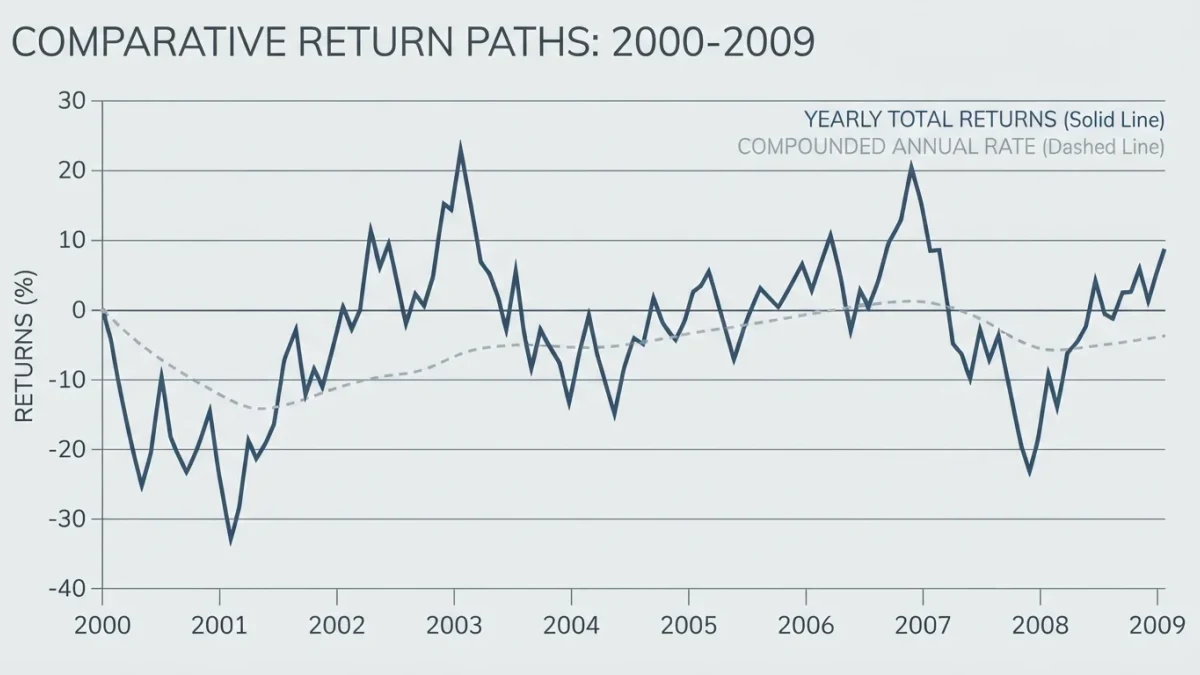
CAGR is the constant annual growth rate connecting a starting value to an ending value, and it quietly assumes a smoothness the underlying returns never had.

Total return counts reinvested distributions while price return counts price change alone, and the difference between the two compounds into a large gap over…

Market, limit, and stop orders differ in one variable — which party controls the trade price — and each type trades execution certainty against price control in…